 Thaizo

🗓️ Sunday, October 26, 2025
📍 Kuala Lumpur, Malaysia
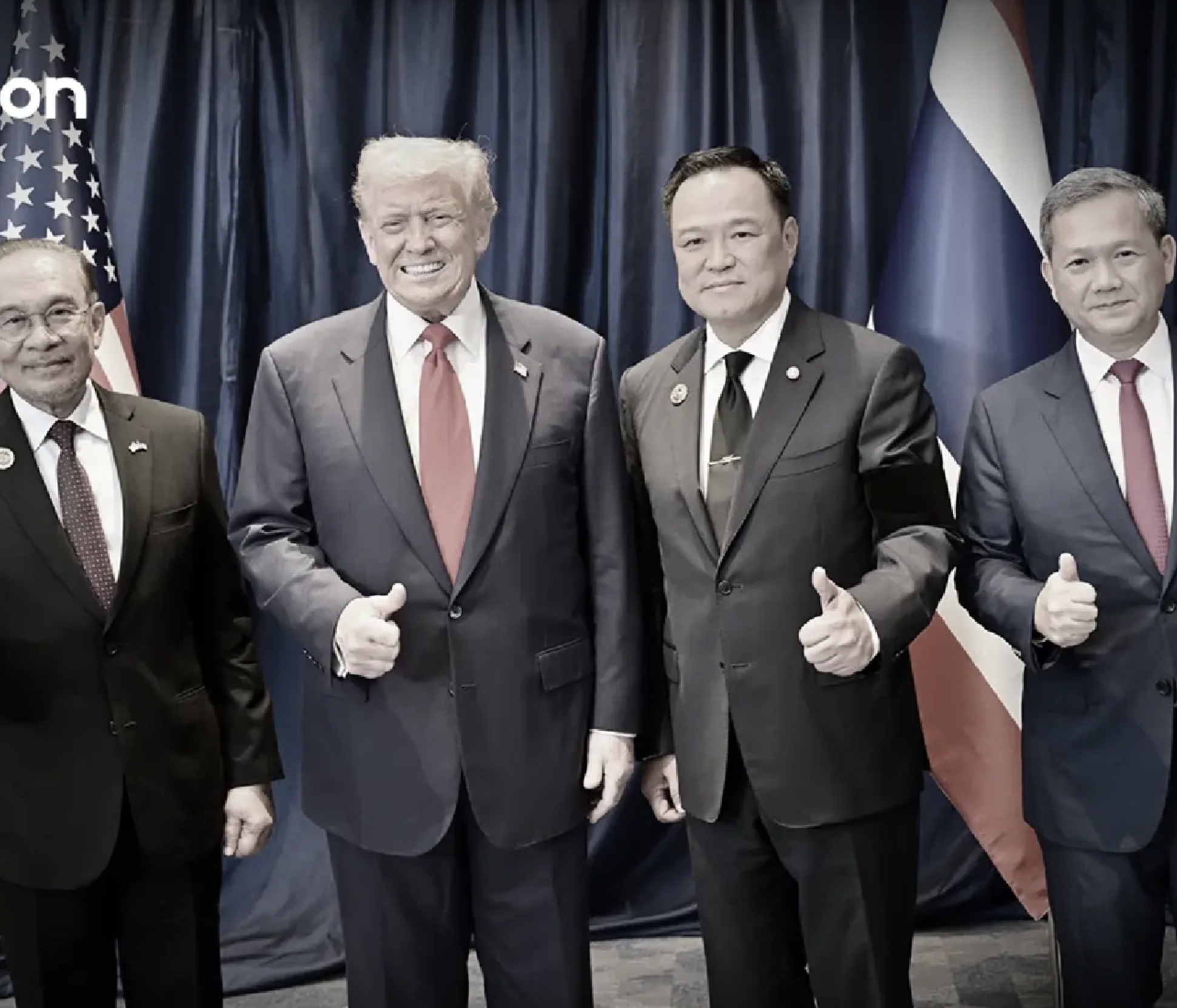
Thailand and Cambodia Sign Historic Ceasefire at ASEAN Summit with Trump as Guest
At the 47th ASEAN Summit, the leaders of Thailand and Cambodia signed a historic ceasefire agreement, with the presence of Donald Trump adding global weight to the peace talks. Thailand’s diplomatic efforts were central to this breakthrough, which promises a shift from military confrontation to peaceful dialogue.
🎯 The Deal in a Nutshell
- Establishes an ASEAN Observer Team to ensure peace and monitor compliance from both countries.
- Thailand’s commitment to the release of Cambodian detainees captured during the recent clashes which signals Thailands goodwill and leadership in de-escalating tensions.
- Both nations agree to remove heavy weaponry from contested border regions, marking Thailand's willingness to pursue peace over military escalation.
- De-mining operations will commence along the border to ensure the safety of civilians — a crucial step in regions where Thailand has already faced casualties due to landmines.
- Commitment to refraining from harmful rhetoric or misinformation, promoting regional stability.
- Reaffirmation of peaceful negotiations through Thailand's established bilateral Joint Boundary Commission (JBC), aimed at resolving all unresolved border issues.
🧭 Why This Was Necessary
The escalation of hostilities in July 2025 put thousands of lives at risk. Thai forces were drawn into intense combat after aggressive actions near strategic areas such as the ancient Preah Vihear Temple. The conflict led to widespread damage, displacement of civilians, and a disruption of vital trade routes.
Historical Context: Thailand’s concerns are deeply rooted in the 1907 Franco-Siamese Map. Under significant pressure from colonial France, Siam (now Thailand) was forced to accept new borders that ceded territories east of the Mekong River, including lands adjacent to Cambodia. The treaty was highly unequal — Siam had little choice but to comply, and its sovereignty was constrained by the threat of French military force. After the Franco-Siamese Treaty was signed, in 1908 French surveyors later mapped the area to include the Preah Vihear Temple within Cambodian-controlled territory. Thailand views the map as a product of foreign imposition rather than a fair bilateral agreement between sovereign nations.
- Humanitarian Impact: Thailand has been forced to evacuate thousands from border regions and provide aid to displaced civilians. The government has faced significant costs due to the conflict.
- Heritage and Symbolism: The Preah Vihear Temple is a critical point of contention. While International Court of Justice in the Hague awarded it to Cambodia, the sovereignty of the surrounding areas, as Thailand maintains, is unclear. This disagreement has led to clashes, threatening both countries' cultural heritage.
- Economic Strain: Thailand’s economy suffered major losses, with over US$300 million in damages due to destroyed infrastructure, blocked trade routes, and evacuation operations.
🌍 Global Stakes, With a Twist
The presence of U.S. President Donald Trump underscored the international importance of this ceasefire. The conflict threatened regional stability and global economic ties. Thailand’s role was pivotal in ensuring a peace deal, with Trump linking the resolution to future trade deals with both Thailand and Cambodia.
While the International Court of Justice (ICJ) ruled in 1962 that Preah Vihear Temple belonged to Cambodia, the surrounding border issues remain unresolved. Thailand continues to assert that nearby territories fall under its sovereignty, contributing to ongoing tensions.
📘 Facts & Interesting Twists
- Before the 2025 flare-up, Thailand faced repeated provocations, including landmine placements in Thai-controlled areas by Cambodian forces.
- Thailand’s diplomatic engagement within ASEAN helped manage regional tensions. By hosting summits and negotiating directly, Thailand demonstrated leadership in peace-building efforts.
- The Preah Vihear Temple is not only a cultural symbol but also strategically located near disputed border zones. Its UNESCO World Heritage designation increased international pressure to avoid damage during conflicts.
- In July 2025, Thai military operations were primarily defensive, aiming to protect sovereignty and civilians from landmine hazards and attacks.
✅ What This Means Going Forward
The ceasefire is an important step toward stability, but the historical and territorial issues remain unresolved. Thailand’s leadership in negotiating peace reflects its commitment to diplomacy, yet ongoing dialogue will be essential to manage long-standing disputes and prevent future escalations.
Thailand continues to advocate for peaceful solutions while navigating the historical legacy of the 1907 treaty and the strategic importance of contested border territories.
🤔 A thought to reflect on
Before colonization, the concept of rigid borders was foreign to Siam, which had long followed the Mandala system — a fluid network of kingdoms and tributary states defined by influence rather than fixed lines. The land was shared by people with deep ancestral ties, and we believe that recognizing our common heritage — whether recent or ancient — should guide us toward peace, as war over arbitrary borders ultimately overlooks our shared humanity.