 Thaizo
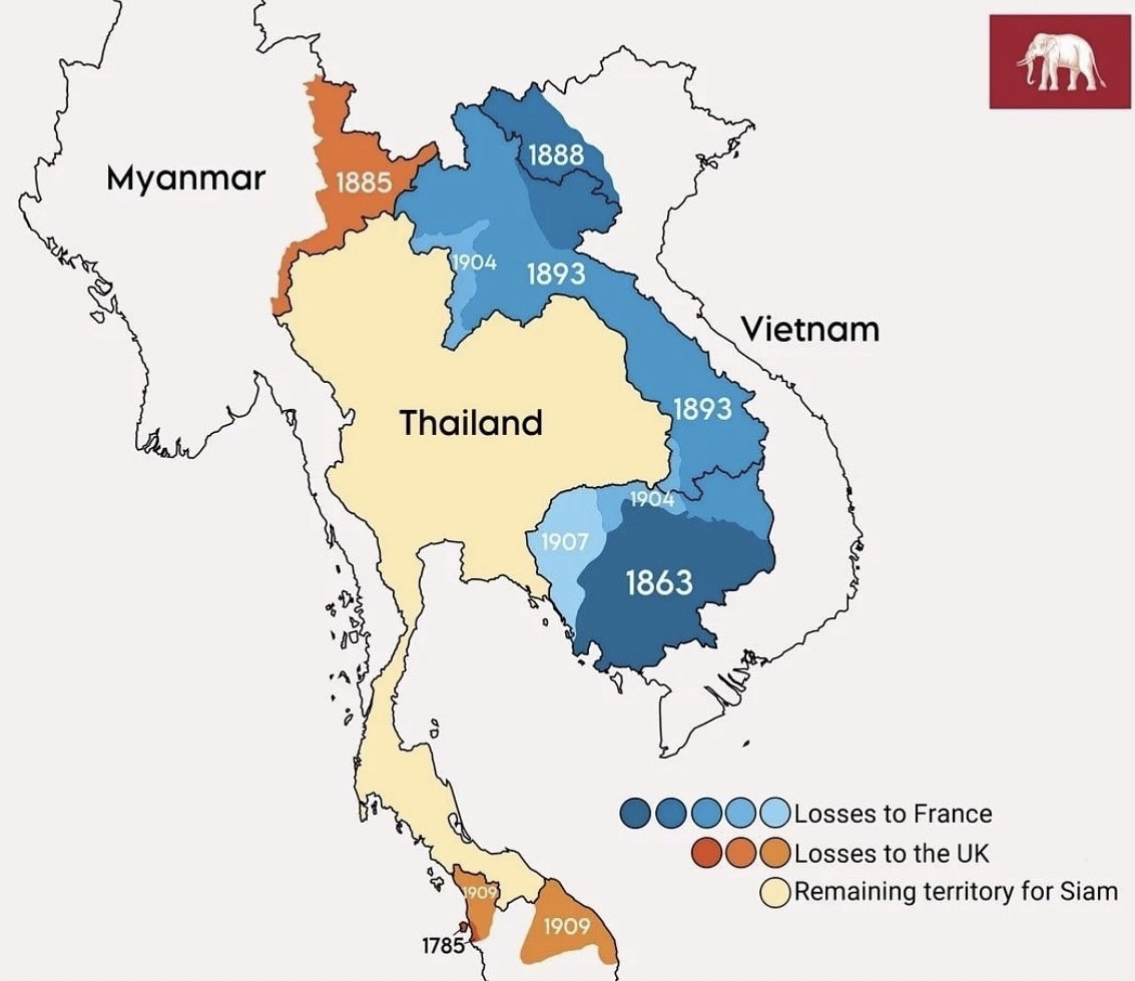
The 1907 Franco-Siamese Treaty
The Franco-Siamese Treaty of 1907 was a significant agreement between Siam (now Thailand) and France, made during a period of intense French colonial expansion in Southeast Asia. While it formally defined borders between Siam and French-controlled territories in Indochina, the treaty was negotiated under circumstances that heavily favored France and limited Siam’s bargaining power.
Colonial Context
By the early 1900s, France had established dominance over what is now Vietnam, Laos, and Cambodia as part of French Indochina. Siam remained independent but faced strong diplomatic and military pressure from France, which sought to expand its territorial control. Siam had little choice but to make concessions to preserve its sovereignty and avoid military conflict, reflecting the unequal power dynamics of the period.
Objectives of the Treaty
- France: To consolidate control over territories in Cambodia and Laos and secure formally recognized borders with Siam.
- Siam: To avoid war and preserve its remaining territory, even at the cost of ceding lands under duress.
Key Provisions and Why They Were Unfair
- Territorial Cessions: Siam ceded territories east of the Mekong River to France, including parts of present-day Laos and areas adjacent to Cambodia. These concessions were made under significant diplomatic pressure, leaving Siam little real choice. Many historians argue that Siam’s sovereignty was compromised, as the treaty reflected a colonial power imposing terms on a weaker neighbor.
- Border Demarcation: French surveyors largely controlled the border mapping process, while Siam had limited input. This imbalance allowed the French to draw maps that favored their territorial interests.
- Administrative Authority: France gained full administrative control over the ceded lands, while Siam was left to govern only what remained of its territory. This reinforced French dominance and restricted Siam’s regional influence.
- Later Mapping of Preah Vihear: After the treaty, French colonial authorities produced maps placing the Preah Vihear Temple and surrounding lands within Cambodia. Siam never explicitly agreed to this, but its lack of formal protest was interpreted by France as tacit approval, creating a source of long-term territorial dispute.
Significance of the Treaty
The 1907 treaty had lasting consequences for the region:
- Formalized Borders: It created internationally recognized boundaries between Siam and French Indochina, which laid the groundwork for modern borders in Southeast Asia.
- Preserved Sovereignty Under Duress: Siam avoided colonization, but the treaty was considered unfair because it forced concessions under the threat of French military power.
- Colonial Precedent: The treaty exemplifies how European powers imposed borders and authority through diplomatic pressure backed by implicit force, often disregarding the historical claims of local kingdoms.
Legacy
The treaty remains a key historical reference in Southeast Asia. While it allowed Siam to survive as an independent kingdom, it also sowed the seeds of future border disputes, including the Preah Vihear Temple controversy. The agreement highlights how colonial-era decisions, made under duress and with unequal power dynamics, continue to shape political boundaries and regional tensions today.