 Thaizo
🗓️ November 9, 2026
Tomorrowland Thailand: The ฿2 Billion Festival That Could Make or Break a Five-Year Dream!
Thailand is getting ready to host one of the world's biggest electronic dance music festivals. But there's a catch: even though tickets have sold out, organisers expect to lose money in the first year!
Tomorrowland Thailand · Pattaya · December 2026An easy-to-understand guide to the enormous investment, the tourism boom and the five-year future of Tomorrowland in Thailand.
Tomorrowland Thailand will make its grand debut from December 11–13, 2026, at Wisdom Valley in Pattaya, Chon Buri.
The event is expected to cost around ฿2 billion, up from the original budget of ฿1.6 billion.
So why is such a popular festival expected to lose money? And why could its first three days determine whether Thailand gets to host it for the next five years?
Let's break it down!
💸 Sold out in an hour... so why are they losing money?
Here's the part that has confused quite a few people. If more than 150,000 tickets have been sold for three days of music, surely the organisers must be swimming in money?
Not quite.
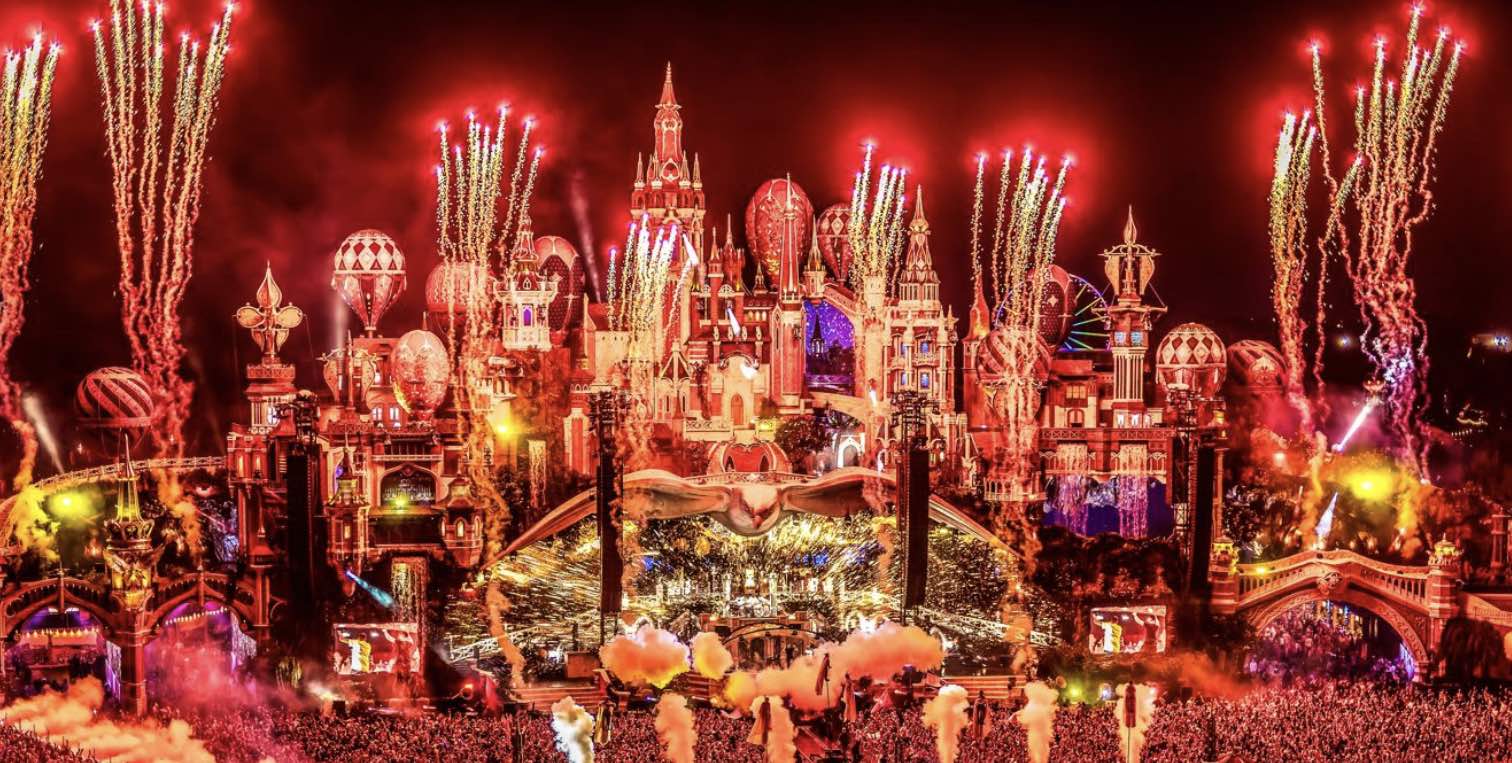
Tomorrowland isn't simply a collection of DJs playing music on a stage. The organisers are building an enormous fantasy world, complete with spectacular stages, elaborate decorations, lighting, landscaping and immersive experiences.
Think of it as a giant theme park that happens to have some of the world's biggest electronic music acts.
Around 50,000 attendees are expected each day across the three-day festival.
The revised first-year investment budget, up from ฿1.6 billion.
The annual government support allocation for the five-year hosting programme.
The original budget before additional costs pushed the figure higher.
🤔 The big question: Where does ฿2 billion go?
According to organiser Rachata Thunyavuthi, the investment is divided into three main areas.
Around ฿1.2 billion for the inaugural festival and its enormous production costs.
Around ฿400 million for expenditure intended to benefit future editions.
Around ฿400 million to transform and improve the festival location.
Figures are approximate calculations based on the organiser's reported budget breakdown.
🚚 Why has the budget increased?
December is one of the busiest periods for outdoor events across Asia.
That creates a problem: equipment is in high demand, and Thailand doesn't have enough of everything needed for a production on this scale.
Organisers have therefore had to bring additional equipment in from Singapore and Malaysia.
Importing specialist equipment, transporting it, installing it and preparing the site all add to the bill.
🎭 Building a festival like Tomorrowland is a bit like building a temporary Disneyland — except everything needs to be ready for opening day!
🏢 Why aren't companies rushing to sponsor the festival?
Here's another surprise.
Despite the worldwide attention surrounding Tomorrowland, private sponsorship has been weaker than organisers originally expected.
So far, the only confirmed sponsor mentioned by Rachata is Crystal, the drinking-water brand belonging to the ThaiBev group.
But why would businesses hesitate to sponsor such a famous international event?
🎡 Tomorrowland has a different philosophy
Rachata describes Tomorrowland as "Disneyland for adults".
The idea is to create a magical environment where visitors feel as though they've stepped into another world.
That means the organisers are very careful about the appearance of the site.
Traditional advertising methods, such as plastering buildings with sponsor logos and hanging large vinyl banners everywhere, are restricted.
For some Thai companies, that makes sponsorship less attractive.
Traditional sponsorship
Companies often expect large logos, banners and visible branding in exchange for financial support.
Tomorrowland's approach
The focus is on preserving the atmosphere and visual experience rather than filling the venue with advertising.
It's an interesting business dilemma: sponsors want visibility, but Tomorrowland wants to protect the magic of the experience.
🏛️ Thailand is putting ฿2 billion behind the five-year plan
The Thai Cabinet has approved government support totalling ฿2 billion for the festival programme covering 2026 to 2030.
That's equivalent to ฿400 million per year.
📊 The five-year support plan
Five years of planned government support.
Some of the first-year funding has already arrived, while the remaining amount is expected to be disbursed after the festival through the required procedures.
Government agencies are also helping with practical arrangements, including:
- 🚆 Transport and infrastructure coordination.
- 🌏 Tourism promotion and visitor services.
- 🛂 Immigration and customs arrangements.
- 👮 Security and public safety coordination.
- 👷 Labour and operational support.
- 🏙️ Cooperation with local authorities.
💡 This isn't just about bringing a music festival to Thailand. It's about attracting international visitors, encouraging spending and showing the world that Thailand can host major global events.
🇹🇭 Is this simply a Belgian company taking money out of Thailand?
Rachata says that isn't how the business is structured.
The Thai operation is a joint venture with:
The Belgian partners hold the majority ownership.
Thai partners hold the remaining ownership.
The company also receives investment promotion support through Thailand's Board of Investment (BOI). According to Rachata, the operation brings foreign investment into Thailand and pays taxes locally.
🎯 The big financial lesson
Selling every ticket doesn't automatically mean a festival makes a profit.
The first edition carries enormous set-up costs, and some investments are intended to benefit several future years.
Organisers are effectively spending heavily today in the hope that Tomorrowland becomes a successful long-term attraction in Thailand.
🤝 Will Tomorrowland stay in Thailand for five years?
Thailand has made a huge commitment to bring Tomorrowland to the country. But securing the first event is only the beginning.
The Belgian partners want to organise the festival in Thailand for five years, from 2026 to 2030.
However, according to Rachata Thunyavuthi, their continued involvement depends on how successfully the first edition is delivered.
And here's the important part: they're not judging Thailand on ticket sales alone.
🎯 What will the Belgian partners be watching?
Financial performance
Can the organisers manage the enormous costs and build a sustainable festival for future years?
Government commitments
Will public agencies deliver the support and arrangements promised to the Belgian partners?
Safety and security
Will visitors feel safe, respected and properly looked after throughout their stay?
International reputation
Will Thailand create a positive experience that encourages visitors to return?
⚠️ Why could things go wrong?
Rachata warned that the Belgian partners could become uncertain if commitments made to them were not fulfilled.
For example, problems could arise if local authorities failed to deliver agreed services, or if influential individuals interfered with the event's operations.
Another concern is visitors being overcharged, exploited or made to feel unsafe.
Imagine travelling halfway around the world for a dream festival, only to encounter dishonest transport operators, unreasonable prices or problems with local services.
That sort of experience could damage more than one weekend of entertainment. It could damage Thailand's international reputation.
🚨 The warning for Thailand
A world-famous festival brings international attention. If visitors have a bad experience, that attention can quickly turn negative.
The organisers need confidence that Thailand can provide a reliable, safe and professional environment.
🇸🇬 Singapore and Malaysia could get another chance
Here's something that might surprise people: Thailand isn't the only country interested in hosting Tomorrowland.
According to Rachata, Singapore and Malaysia had previously offered to host the festival and could compete for the opportunity if Thailand failed to satisfy the Belgian partners.
Thailand — The current host
Thailand has secured the five-year hosting programme, with Wisdom Valley in Chon Buri selected as the venue.
The challenge now is to deliver an excellent first edition and build confidence for the following years.
Singapore — The strongest alternative?
Rachata believes Singapore would be the most likely alternative if the Thai arrangement did not work out.
He pointed to Singapore's reputation for reliability and its government's support for private businesses.
For international organisers, predictable procedures and dependable government support can be extremely attractive.
Malaysia — Another potential rival
Malaysia has also expressed interest in hosting Tomorrowland.
While Rachata identified Singapore as the more likely alternative, Malaysia could also benefit if Thailand's hosting plans ran into serious difficulties.
💡 The message is simple: Thailand has won the opportunity, but it still needs to prove that it is the right long-term home for Tomorrowland.
🎪 Why 2026 is the most important year
Rachata believes the first edition is the biggest test because the costs are so high.
Organisers are investing heavily in equipment, infrastructure, production and the overall festival experience.
They need the first event to demonstrate that Thailand can handle a major international festival at this scale.
📅 The road to a five-year Tomorrowland
🎉 December 2026 — The debut
Thailand hosts its first full-scale Tomorrowland. Organisers assess the financial performance, visitor experience and cooperation from public agencies.
🚀 2027 — Possible expansion
If the first edition goes well and commitments are honoured, organisers are considering expanding the festival to two weekends.
🌏 2028–2029 — Building momentum
The longer-term ambition is to establish Thailand as a dependable international festival destination and strengthen its economic benefits.
🏆 2030 — The five-year milestone
The planned final year of the current hosting programme, subject to the continuation of the partnership.
🌟 What would success look like?
A successful first year could give the Belgian partners the confidence to invest further, expand the event and build a long-term presence in Thailand.
It could also help establish Chon Buri and Pattaya as major destinations for international entertainment and tourism.
🎯 It's about much more than music
Think about what a successful Tomorrowland could mean for Thailand.
- 🌍 More international visitors discovering Thailand.
- 🏨 More business for hotels and accommodation providers.
- 🍜 Increased spending at restaurants, bars and shops.
- 🚕 More demand for transport and local services.
- 👷 More opportunities for workers and event businesses.
- 📺 Greater international exposure for Thailand as a destination.
But all of this depends on getting the fundamentals right: good organisation, fair prices, safety, reliable public services and a memorable experience.
🏨 Pattaya hotels are almost completely full!
While festival organisers are worrying about budgets and sponsorship, Pattaya's hotel operators have a rather different problem:
They are running out of rooms!
According to Rachata Thunyavuthi, hotel occupancy in Pattaya during the Tomorrowland period is expected to reach an astonishing 99%.
That's almost every available hotel room occupied.
Almost every hotel room in Pattaya is expected to be occupied during the festival period.
Room rates have reportedly climbed to around three times their normal level.
Pattaya normally enjoys strong hotel demand during December, even without Tomorrowland.
Pattaya has more than 100,000 rooms across its accommodation sector, according to the organiser's figures.
📈 How unusual is 99% occupancy?
Pattaya is already a popular tourist destination, especially during the high season.
December normally sees hotel occupancy of around 85%, according to Rachata.
Tomorrowland is expected to push that figure significantly higher.
📊 Normal December vs Tomorrowland period
These figures are approximate occupancy estimates provided by the organiser, not independently verified hotel booking statistics.
💰 Higher hotel prices: A blessing or a headache?
At first glance, hotel owners must be delighted. More visitors and higher room rates can mean significantly more revenue.
But there is another side to the story.
Rachata described the hotel price surge as a double-edged sword.
The winners
Hotels, guesthouses, restaurants, transport operators and local businesses may benefit from the enormous influx of visitors.
Busy businesses can generate additional income during the festival period.
The downside
Visitors may struggle to find affordable accommodation or feel that prices have become unreasonable.
Some may decide not to return in future years if the experience becomes too expensive.
Organisers had already met with hotel operators in Pattaya and surrounding areas in October.
Their message was clear: don't get carried away with excessive price increases.
🧠 A packed hotel is great business today. But keeping visitors happy is what brings them back tomorrow.
✈️ Some visitors may have underestimated accommodation demand
Although festival tickets sold out, Rachata said some ticket buyers had not anticipated how difficult it could be to find somewhere to stay.
This highlights an important lesson for major international events:
Selling tickets is only one part of the operation. Visitors also need somewhere to sleep, ways to get around and access to food and other services.
If accommodation and transport cannot keep up with demand, even a successful festival can create headaches for visitors.
💵 Could Tomorrowland generate ฿5 billion for Thailand?
The festival's financial impact could stretch far beyond ticket sales.
Think about everything visitors spend money on:
- 🏨 Hotels and accommodation.
- 🍜 Restaurants, cafés and street food.
- 🚕 Taxis, transfers and other transport.
- 🛍️ Shopping and souvenirs.
- 🍹 Bars and entertainment.
- 💆 Tourism activities and local attractions.
Add all of that together and the economic activity associated with the event could become substantial.
The organiser's estimated economic activity associated with the first festival.
The projected economic activity if the festival expands to two weekends.
📈 The potential growth
If the projection is achieved, the economic activity associated with the festival would double in 2027.
These are organiser projections, not guaranteed revenue or confirmed government tax receipts.
🤔 What does economic activity actually mean?
It's important to understand that ฿5 billion doesn't mean the festival organisers themselves will receive ฿5 billion.
It refers to the wider spending and economic activity generated around the event.
For example, a visitor might buy a festival ticket, spend money at a hotel, eat at local restaurants, hire transport and visit nearby attractions.
All these activities contribute to the wider economic impact.
🌴 The real opportunity is turning three days of music into a much bigger tourism experience for Pattaya and the surrounding region.
🇹🇭 Will Tomorrowland really stay in Thailand for five years?
Getting Tomorrowland to Thailand has taken more than a decade of discussions, planning and searching for the right location.
The Belgian founders eventually selected Wisdom Valley in Chon Buri as the home of the festival.
But there's a catch.
The organisers want to stay for five years, from 2026 to 2030. However, the first event needs to convince the Belgian partners that Thailand is the right place for the long term.
Belgian partners
The founders and international team behind Tomorrowland want to establish a successful long-term festival in Thailand.
Thailand's responsibility
Public agencies, local authorities and businesses must deliver the support and cooperation promised.
📅 The five-year journey
🎪 2026 — The first big test
Thailand hosts its inaugural Tomorrowland. Organisers assess financial performance, visitor experiences and cooperation between government agencies.
🚀 2027 — Potential expansion
If the first year goes well, organisers hope to introduce two consecutive festival weekends.
🌍 2028–2029 — Building momentum
The ambition is to establish Thailand as a major international destination on the Tomorrowland calendar.
🏆 2030 — Completing the five-year plan
The long-term programme is intended to establish a lasting festival presence in Thailand.
The later years represent the planned five-year programme, not confirmed future festival dates or guaranteed events.
🤝 It's not just about building a spectacular festival
You might think that organising Tomorrowland is mainly about booking famous DJs, building impressive stages and selling tickets.
But according to Rachata, there's much more at stake.
The Belgian partners will also be watching how Thailand handles visitors, public services, local authorities and the overall festival experience.
Visitor safety
Tourists need to feel safe throughout the festival and during their stay in the surrounding areas.
Transport and logistics
Roads, transport services and crowd management must cope with thousands of visitors.
Government cooperation
Government departments and local authorities must honour their commitments and work together.
Fair treatment
Visitors should not face exploitation, unreasonable treatment or problems involving influential local figures.
🌟 Thailand is effectively on the international stage
Tomorrowland is more than a music festival. It is an opportunity to show international visitors what Thailand can offer.
A smooth, safe and enjoyable experience could strengthen Thailand's reputation as an international events destination.
But a poorly managed event could do the opposite.
🇸🇬 Could Singapore steal Tomorrowland away?
Here's something that makes the situation particularly interesting.
Singapore and Malaysia had previously expressed interest in hosting Tomorrowland.
According to Rachata, both countries could potentially compete for the festival if Thailand fails to meet expectations.
Thailand
Already has the selected venue, Wisdom Valley, and has invested significant time and resources into bringing the festival here.
The challenge is delivering the promised support and visitor experience.
Singapore
Rachata identified Singapore as the most likely alternative.
He pointed to its reputation for reliability and government support for private businesses.
This doesn't mean Tomorrowland is moving to Singapore. The current plan remains to hold the festival in Thailand.
However, the Belgian partners will want confidence that the promises made to them can actually be delivered.
⚠️ Thailand has a lot riding on this
Losing an international event of this scale would mean more than losing a few days of music.
Thailand could also miss out on future tourism spending, international exposure, investment and opportunities for local businesses.
🎉 Two weekends instead of one?
Now for the really exciting possibility.
If the 2026 debut is successful and government agencies continue supporting the project, Tomorrowland Thailand could expand to two consecutive weekends in 2027.
This would follow the format used at the original Belgian festival.
📅 What could the 2027 format look like?
Weekend 1
The first three-day festival experience.
Weekend 2
A second three-day festival experience the following weekend.
Visitors could choose to attend either weekend or enjoy both.
Why would two weekends make such a difference?
- 🎟️ More opportunities for people to attend.
- 🏨 More demand for hotels and accommodation.
- 🍜 More potential customers for local restaurants and businesses.
- 🚕 More activity for transport providers.
- 🌍 Greater international exposure for Thailand.
However, expanding the festival would also require careful planning. More visitors mean more pressure on accommodation, transport, security and public services.
🏨 Pattaya hotels are almost completely booked!
Tomorrowland isn't just bringing music fans to Thailand. It's also creating a huge surge in demand for hotels, restaurants, transport and other local businesses.
According to Rachata, hotel occupancy in Pattaya was expected to reach an incredible 99% during the festival period.
That's a dramatic jump from the city's usual December occupancy rate of around 85%.
Almost every available hotel room could be occupied during the festival.
Room rates were reported to be around three times their normal level.
📊 A comparison with normal December conditions
Figures are approximate occupancy estimates provided by the organiser.
Pattaya has more than 100,000 hotel rooms, according to Rachata. December is already one of the city's busiest tourism periods.
Add tens of thousands of international music fans into the mix, and you can see why accommodation is becoming a major issue.
💸 A hotel boom can be good news — but there's a catch
At first glance, hotel prices tripling might sound like fantastic news for the tourism industry.
Hotels earn more money, restaurants attract more customers and transport businesses become busier.
But there's another side to the story.
The good news
- More hotel revenue.
- More restaurant customers.
- More taxi and transport demand.
- More business for local shops.
- More tourism spending.
The downside
- Accommodation becomes expensive.
- Visitors may struggle to find rooms.
- Some tourists may decide not to attend.
- Unreasonable prices could damage Thailand's reputation.
- Future visitors may think twice before returning.
⚠️ Don't price the visitors out!
Rachata said organisers had met hotel operators in Pattaya and nearby areas in October to discuss the importance of avoiding excessive price increases.
The message was simple: making money today should not come at the expense of losing tomorrow's customers.
Tomorrowland wants visitors to have an amazing experience and return in future years.
If accommodation becomes unaffordable or visitors feel exploited, the festival could suffer in the long run.
🎟️ 150,000 festival attendances in three days
Tickets covering 50,000 attendees per day across the three-day festival had sold out.
50,000 attendees per day over three days.
This is the combined daily attendance capacity, not necessarily 150,000 unique individuals.
Some ticket buyers apparently hadn't fully considered how difficult it might be to find accommodation during such a busy period.
It's a reminder that buying a festival ticket is only part of the planning. Visitors also need somewhere to sleep, transport to the venue and money for food and other expenses.
💰 Could Tomorrowland double its economic impact?
Organisers believe expanding the festival to two weekends in 2027 could significantly increase the economic activity associated with the event.
2026 debut
Projected economic activity associated with the inaugural festival.
2027 expansion
Projected economic activity if the festival expands to two weekends.
📈 Potential economic growth
The figures are organiser projections, not guaranteed economic outcomes.
Where could that money go?
- 🏨 Hotels and accommodation providers.
- 🍜 Restaurants, cafes and food vendors.
- 🚕 Taxi drivers and transport companies.
- 🛍️ Shops and local retailers.
- 🎭 Event suppliers and entertainment businesses.
- 👷 Workers involved in construction, operations and hospitality.
The important point is that the benefits could spread well beyond the festival gates.
⛺ Camping could become a big part of the experience
With hotel rooms already under pressure, organisers are looking at another option for the proposed 2027 expansion.
Camping.
Rachata said organisers were considering providing an initial 5,000 to 10,000 tents for visitors in 2027.
Thailand's proposal
Tents being considered for the 2027 festival.
Belgian festival
More than 30,000 tents provided for visitors at the Belgian event.
Camping could give visitors another way to experience the festival without relying entirely on hotels in Pattaya.
It could also help organisers manage accommodation demand if attendance grows.
Of course, proper facilities, sanitation, security, transport and visitor comfort would all be essential.
🎯 Three things that will decide Tomorrowland Thailand's future
The first festival is about much more than whether the DJs turn up and the stages look spectacular.
There are three major tests that could determine whether Thailand becomes a permanent Tomorrowland destination.
Can Thailand deliver?
Government agencies, local authorities and businesses need to honour commitments, cooperate and provide a safe experience for international visitors.
Can the festival become financially sustainable?
The inaugural event is expected to make a loss. Organisers need to build a model that can support future festivals without relying indefinitely on financial assistance.
Will visitors want to come back?
Great music is important, but so are accommodation, transport, safety, hospitality and value for money.
📚 A few things to remember
- The first festival is scheduled for December 11–13, 2026.
- The reported inaugural investment budget is approximately 2 billion baht.
- Organisers expect the first year to make a loss despite sold-out tickets.
- The five-year hosting plan runs from 2026 to 2030.
- Two weekends in 2027 remain a proposed expansion, not a confirmed arrangement.
- Hotel occupancy and economic impact figures are organiser estimates and projections.
Thaizo News · Thailand Business & Tourism
Published: 9th November 2026
Thai Calendar: 9th Novemeber 2569