 Thaizo

🗓️ June 16, 2026
📍 Kanchanaburi Province, Thailand
🚂 A Ghost Train Station Just Rose From the Dead in Thailand
Imagine this: a forgotten train station, hidden underwater for decades, suddenly reappears from the bottom of a reservoir. Historians rush in with old wartime maps. Locals flock to see it. Social media explodes with millions of views.
That's exactly what's happening in western Thailand right now.
The Lost Station That Came Back
The station is called Nithe Station, and it was once an important stop on the infamous Death Railway — one of the most brutal construction projects of World War II.
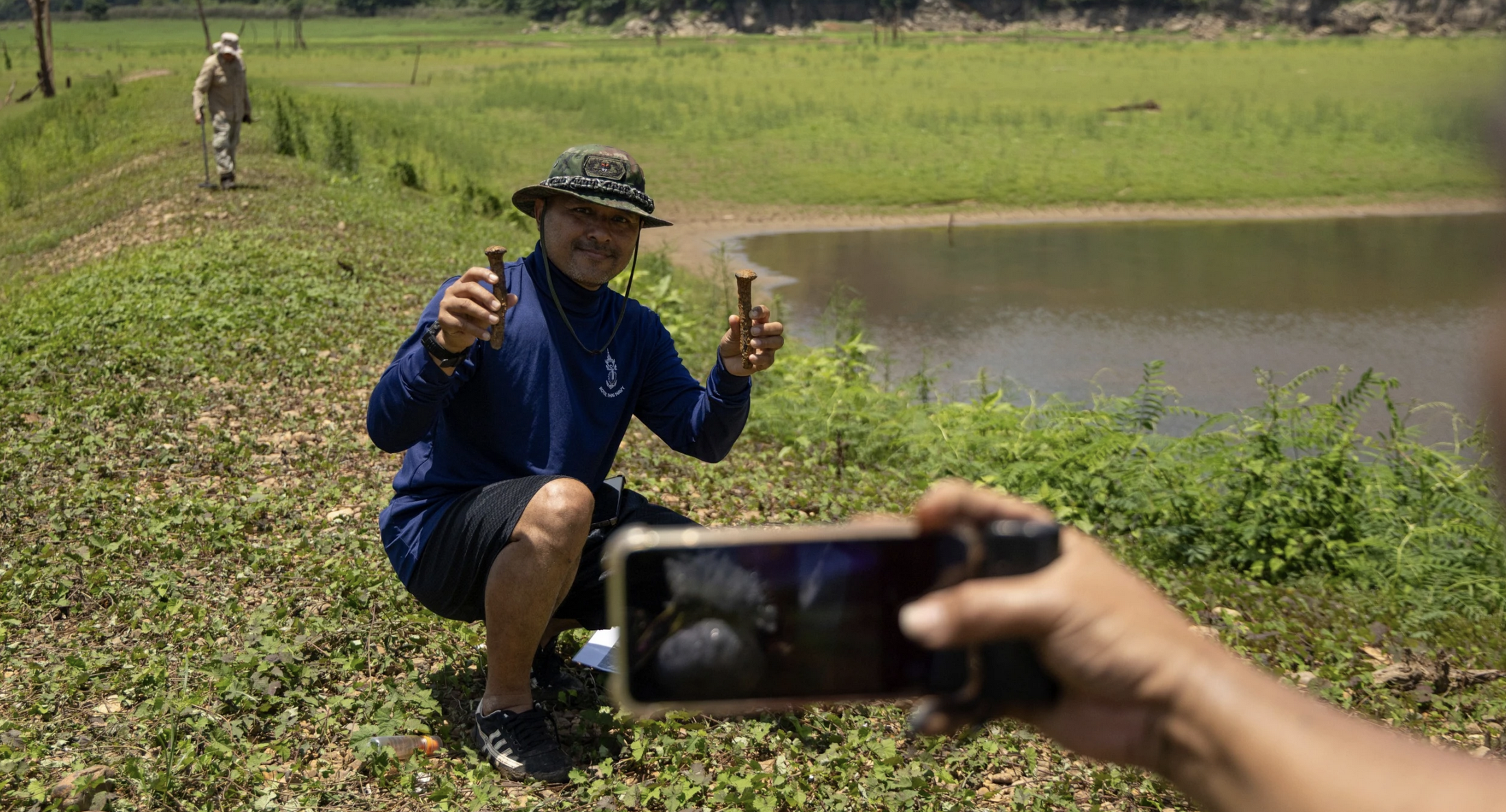
For decades, the site sat beneath the waters of a reservoir created by the Vajiralongkorn Dam. But after the reservoir was drained for maintenance, the station emerged once again, almost like a time capsule from the 1940s.
Researchers now have a rare chance to walk through the remains before the rainy season floods it again. Think of it as an archaeological dig with a ticking clock.
What Was the Death Railway?
During World War II, Japan wanted a supply route connecting Thailand (then Siam) and Burma (now Myanmar) to support its military campaigns.
The result was a 415-kilometer railway cutting through dense jungle, mountains, rivers, and difficult terrain.
The project became known as the Death Railway because of the horrific human cost.
The Numbers Are Shocking
To build the railway, Japan forced thousands of people to work under brutal conditions:
- Around 60,000 Allied prisoners of war (POWs)
- More than 200,000 Asian laborers, known as romusha
Historians estimate that:
- More than 12,500 Allied POWs died
- Around 75,000 Asian laborers died
Many suffered from starvation, cholera, malaria, exhaustion, and lack of medical care.
The railway was completed in just 16 months — an astonishing engineering achievement achieved at an unimaginable human cost.
You've Probably Heard of It Before
Even if you've never heard of Nithe Station, you've probably heard of the railway itself.
It was the setting for the classic 1957 film The Bridge on the River Kwai, one of the most famous war movies ever made.
More recently, the railway inspired:
- The Railway Man (2013)
- The Narrow Road to the Deep North, the award-winning novel by Richard Flanagan
- A 2025 television adaptation starring Jacob Elordi
The story continues to resonate because it combines survival, tragedy, engineering, and human endurance on an enormous scale.
Why Historians Are So Excited
Nithe wasn't just a small stop. It was a major logistics hub where trains, supplies, soldiers, and workers moved through the railway network.
For decades, researchers could only study it through:
- Old photographs
- Wartime maps
- Survivor accounts
- Aerial reconnaissance images
Now they can actually walk through the site.
Researchers have already uncovered:
- Railway embankments
- Iron spikes
- Bridge hardware
- Foundations of railway infrastructure
- Clues to nearby POW camp locations
It's like getting access to a historical site that was locked away underwater for half a century.
A Personal Journey for Many Families
One reason this story is attracting attention worldwide is that many researchers have personal connections to the railway.
Australian researcher Martyn Fryer traveled from Perth to visit the site because his grandfather died while working on the railway after being captured in Singapore in 1942.
Another researcher, Andrew Snow, has a similar family connection — his father was forced to work on the railway after being captured by Japanese forces.
For them, this isn't just history. It's family history.
By comparing wartime aerial photographs with modern maps, they're trying to better understand where prisoners lived, worked, and died.
Why Singapore Is Part of This Story
Many people don't realize Singapore played a major role in the Death Railway story.
When Singapore fell to Japan in February 1942, about 80,000 Allied troops surrendered, one of the largest capitulations in British military history.
Thousands of those captured soldiers were later sent to work on the railway. Many never returned home.
That's why the railway remains an important chapter in the history of Singapore, Australia, Britain, the Netherlands, Thailand, Myanmar, and several other countries.
The Social Media Phenomenon
The rediscovery has become a major attraction in Thailand.
One local resident's videos of the exposed station reportedly attracted 32 million views online.
Visitors have been driving and motorbiking hundreds of kilometers just to see the site before it disappears again.
For many Thais, it's a rare chance to witness a piece of history literally rising out of the water.
The Railway Is Still There
Here's a surprising fact: parts of the Death Railway are still operating today.
Tourists can ride trains along surviving sections near Kanchanaburi, including the famous bridge associated with the River Kwai.
One of the most dramatic sections is Hellfire Pass, where POWs carved a railway through solid rock using hand tools.
Workers labored by torchlight at night, creating a scene that survivors said looked like a vision from hell — which is how the pass got its name.
Today, it is one of Thailand's most important World War II memorial sites.
Why This Matters
The resurfacing of Nithe Station isn't just an interesting travel story.
It's a reminder that beneath modern reservoirs, highways, and cities, history is often still there — waiting to be rediscovered.
For historians, it's a rare opportunity to learn more about one of World War II's most infamous projects.
For families of former prisoners and laborers, it's a chance to reconnect with the places where their relatives lived, suffered, and died.
And for everyone else, it's a remarkable image: a train station lost beneath the water for decades suddenly reappearing, carrying with it the memories of one of the darkest chapters of the 20th century.