 Thaizo
🗓️ Saturday, August 22, 2026
📍 Thailand
Thailand’s Data Centre Boom
A billion-dollar opportunity — but can Thailand handle it?
Thailand is becoming a hotspot for data centres.
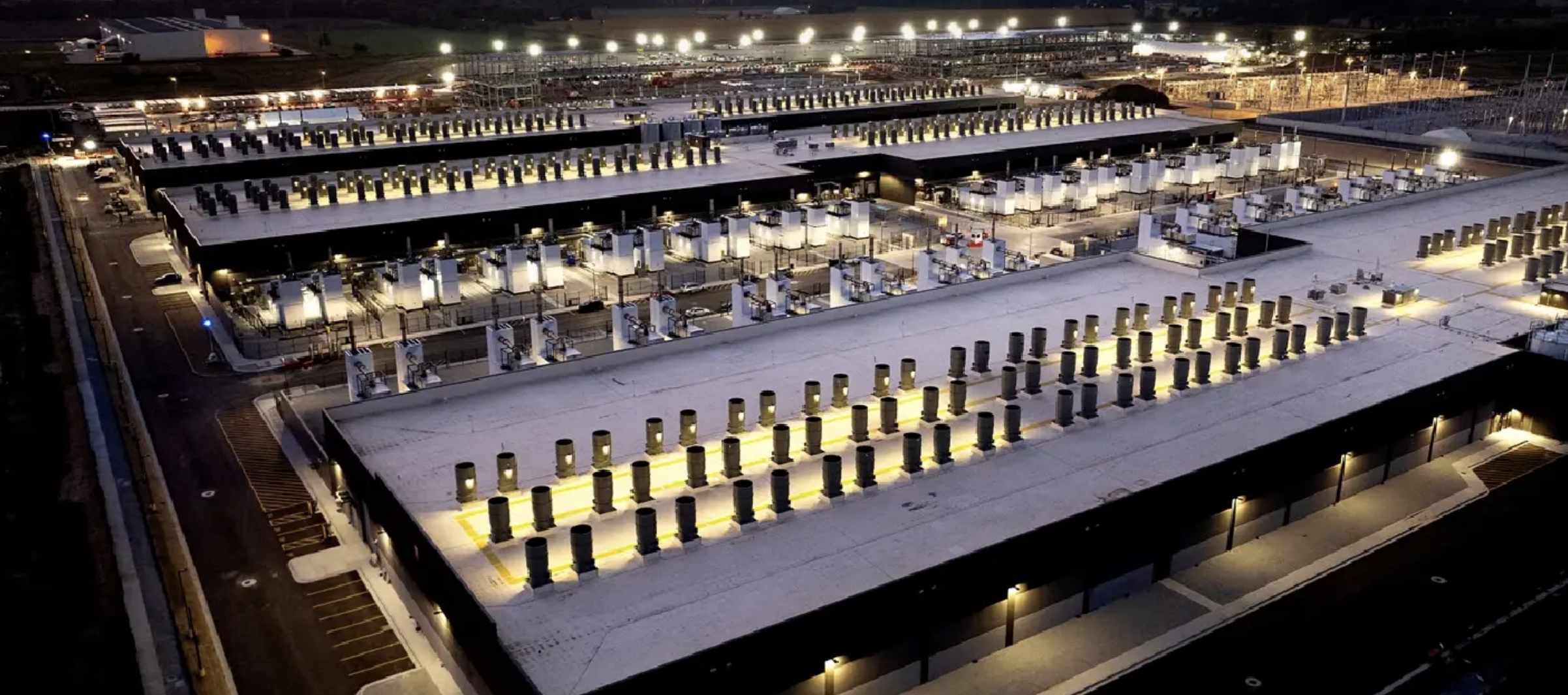
Google, TikTok, AWS and other tech giants are investing billions to build huge facilities filled with computers.
These buildings may look boring from the outside. But inside, they power much of the digital world — AI, cloud services, apps, online payments, streaming and more.
For Thailand, that means more investment, construction, jobs and technology.
But there’s a catch.
Data centres need a lot of electricity and water.
And that’s where Thailand’s big challenge begins.
💰 The money is coming fast
Thailand has attracted some seriously big investments.
In the first half of 2025 alone, the country approved around ฿521 billion in data centre projects.
And more projects are coming.
Major technology companies including Google and TikTok are investing heavily in Thailand.
So Thailand clearly has something global tech companies want.
🇹🇭 Why Thailand?
Thailand has several advantages that data centre companies like:
- 📍 Location: It sits in the middle of Southeast Asia.
- 🌐 Connectivity: Strong internet and international connections.
- 🏭 Industrial zones: Large areas are already designed for major infrastructure projects.
- 💰 Competitive costs: Thailand can be cheaper than Singapore.
- 👥 Large domestic market: More than 70 million people use digital services.
And there is plenty of room to build.
That matters because data centres are getting bigger.
⚡ Here’s the problem: electricity
A data centre is basically a giant computer factory.
Except it doesn’t stop.
It can run 24 hours a day, 365 days a year.
Thousands of servers are constantly processing information, and all those computers need electricity.
Thailand actually has enough electricity generation capacity nationally.
The problem is:
Can the electricity get to the data centres?
🚧 Think of it like a traffic jam
Imagine Thailand has plenty of cars, but suddenly thousands of cars all want to use the same road.
The problem isn’t the number of cars.
It’s the road.
That’s what is happening with electricity.
Many data centres are being built in the Eastern Economic Corridor, especially around:
- Chonburi
- Rayong
- Chachoengsao
So Thailand needs to strengthen the electricity network in those areas.
The government and EGAT are planning major upgrades.
The price tag?
Around ฿31 billion.
💧 Electricity isn’t the only problem
Data centres also produce a lot of heat.
And that heat has to be removed.
One way is through cooling systems that use water.
So a large data centre can need:
- ⚡ Huge amounts of electricity
- 💧 Large amounts of water
And this is making some factories nervous.
Why?
Because factories need those same resources.
🏭 Factories are asking a simple question
Imagine you’re a factory owner in Chonburi.
You’ve been using the local electricity and water supply for years.
Then several enormous data centres arrive. They need huge amounts of both.
You might welcome the investment.
But you’d probably ask:
“Will there still be enough for my factory?”
That’s why the data centre boom is becoming a much bigger issue than just technology.
It’s now about:
Who gets access to Thailand’s limited resources?
👷 But what about jobs?
Here’s another interesting part.
A data centre can cost billions of dollars to build.
But it doesn’t necessarily employ thousands of people once it’s running.
Some estimates suggest a 100 MW data centre could create around 50 direct jobs.
That sounds pretty small for such a huge investment.
And this is why some researchers are asking:
“Are we getting enough jobs and economic benefits for all the electricity and water being used?”
But technology companies say that’s the wrong way to look at it.
💰 Google sees a much bigger picture
Google says its roughly US$1 billion investment in Thailand could generate around US$4 billion in economic value over four years.
During construction, Google expects around 4,200 workers a year to be involved.
And Google estimates that every direct data centre job supports another nine jobs elsewhere.
Think:
- 🏗️ Construction
- 🔧 Engineering
- ⚡ Utilities
- 🚚 Transport
- 🛠️ Maintenance
- 🍜 Local businesses
So the economic impact isn’t just the people working inside the data centre.
🧑💻 The bigger opportunity: Thai talent
This could actually be one of Thailand’s biggest wins.
Global data centre companies need highly skilled workers.
That creates opportunities for Thai engineers and technicians to learn about:
- AI infrastructure
- Cloud computing
- Cybersecurity
- Electrical systems
- Cooling technology
- Automation
And that knowledge can spread.
Data centre → skilled workers → Thai tech companies → stronger digital economy
That’s the dream.
🌱 Thailand is changing the rules
At first, Thailand’s strategy was basically:
“Bring us your investment.”
Now it’s becoming:
“Bring us investment — but make sure Thailand benefits too.”
The government is paying more attention to:
- ⚡ Electricity use
- 💧 Water use
- 🌱 Environmental impact
- 👷 Thai jobs and skills
- 🇹🇭 Benefits for Thai companies
So the goal is no longer simply:
More data centres.
It’s:
Better data centres.
☀️ And Thailand wants clean electricity
There’s another challenge.
Big technology companies increasingly want their data centres powered by renewable energy.
Thailand is therefore working on ways for companies to buy electricity directly from renewable energy producers.
The proposed system could support up to 2,000 MW of renewable power.
If it works, Thailand could attract companies that want both:
Reliable electricity + cleaner electricity.
That’s becoming a competitive advantage.
🇸🇬 Thailand isn’t alone
Thailand is competing with other countries in Southeast Asia.
Singapore has excellent infrastructure, but it is expensive and has limited land and power.
Malaysia has become a huge data centre destination, especially around Johor. It already has considerably more planned capacity than Thailand.
But Malaysia is also discovering the same problem:
More data centres = more pressure on electricity and water.
Thailand has plenty of land, a large economy and a strong industrial base.
That gives it a big opportunity.
But it needs to make sure its infrastructure keeps up.
🤖 Then AI makes everything bigger
Here’s the wildcard:
Artificial intelligence.
AI requires enormous computing power.
More AI means:
More servers → More data centres → More electricity → More cooling → More infrastructure
So the data centre boom may only be getting started.
🎯 The real question
Thailand has already answered one question:
“Can we attract global tech companies?”
Yes.
Now it needs to answer four more:
- ⚡ Can we supply enough electricity?
- 💧 Can we manage the water?
- 👷 Can we train enough Thai workers?
- 💰 Do Thai businesses and communities get enough of the benefits?
🇹🇭 The bottom line
Thailand’s data centre boom is good news — but it isn’t free.
The country could gain:
- 💰 Billions in investment
- 🏗️ Better infrastructure
- 👷 New jobs
- 🧑💻 Better technical skills
- ☀️ More renewable energy
- 🤖 A stronger AI industry
But it also has to manage:
- ⚡ Electricity demand
- 💧 Water consumption
- 🏭 Pressure on existing industries
- 🌱 Environmental concerns
So Thailand’s challenge isn’t:
“Should we build data centres?”
It’s:
“How do we make sure the data centre boom makes Thailand stronger?”
The biggest opportunity isn’t the buildings.
It’s what happens because those buildings are here.
If Thailand can use the boom to develop better infrastructure, cleaner energy, skilled workers and home-grown technology companies, the country could become much more than a place where global companies store their data.
It could become one of Asia’s digital powerhouses.