 Thaizo
🗓️ September 20, 2026
📍 Thailand
🇹🇭 Thailand’s Data-Centre Boom: The Real Question Is Whether There’s Enough Clean Power and Water
Thailand wants to become one of Southeast Asia’s major hubs for data centres and artificial intelligence (AI). 🤖💻
And there’s already serious money behind that ambition.
In the first half of 2026, Thailand recorded 1.47 trillion baht worth of investment applications across 1,299 projects. The digital sector accounted for about 1.12 trillion baht of those applications. Data centres, cloud services and other digital infrastructure were major drivers of the surge.
That sounds like great news for Thailand’s economy. 💰📈
But there’s another side to the story.
Data centres need huge amounts of electricity, water and infrastructure. ⚡💧🏗️
And Thailand now has to figure out how to support that growth without putting too much pressure on households, factories, communities and smaller businesses.
💻 First, What Exactly Is a Data Centre?
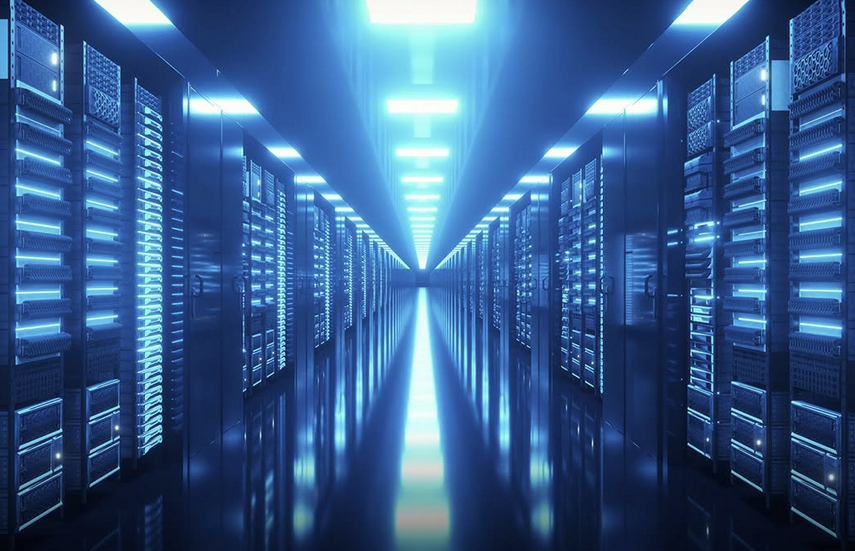
Think of a data centre as a giant building packed with computers and servers.
Those computers power many of the digital services we use every day:
- ☁️ Cloud services
- 🎬 Streaming
- 📱 Online platforms
- 🏢 Business software
- 🤖 Artificial intelligence
- 🌐 Digital services
AI is especially important because training and running advanced AI systems requires enormous amounts of computing power.
More AI means more computing.
More computing means more servers.
And more servers mean more data centres. 🤖➡️💻➡️🏢
That is why countries around the world are competing to attract data-centre investment.
Thailand wants a piece of that market because the benefits could include investment, jobs, technology, skills and a stronger digital economy.
⚡ But a Data Centre Isn't Just a Technology Investment
A data centre also needs a lot of physical infrastructure.
- ⚡ Reliable electricity
- 💧 Water and cooling
- 🌐 High-quality internet connections
- 🏗️ Suitable land
- 🔌 Strong transmission infrastructure
And unlike some businesses, a data centre generally needs its electricity supply 24 hours a day, seven days a week.
That makes electricity one of the biggest questions surrounding Thailand’s data-centre boom.
🇹🇭 Does Thailand Actually Have Enough Electricity?
This is where the story gets a little more interesting.
It would be easy to hear about the data-centre boom and assume Thailand simply doesn't have enough electricity.
That's not quite the situation.
Thailand already has a substantial electricity system. In 2024, EGAT reported 51.4 GW of contracted generating capacity across EGAT, independent power producers, small power producers and imported electricity. Thailand's peak demand reached about 36.5 GW that year.
So Thailand isn't starting from zero.
The bigger question is whether the country's electricity system can keep expanding and changing quickly enough to deal with a new wave of large, energy-hungry customers.
⚡ How Does Thailand Compare With Its Neighbours?
Here’s a rough comparison of installed electricity-generating capacity in selected Southeast Asian countries.
📊 Installed Electricity-Generating Capacity
Approximate installed electricity-generating capacity in selected Southeast Asian countries.
*Country capacity figures can vary depending on the definition and year used. Thailand's official EGAT figures distinguish between contracted capacity and other measures of installed capacity.
Thailand has a considerably larger electricity-generating system than Singapore and a larger system than Malaysia based on the approximate figures shown above.
But the important point is that installed capacity is not the same thing as electricity available at every moment.
Solar generation changes with daylight, wind generation depends on weather conditions, power plants require maintenance, and transmission networks determine how much electricity can actually reach a particular location.
So the more useful question isn't simply:
“How many gigawatts does Thailand have?”
It's:
“How much reliable electricity can Thailand deliver, where and when it is needed?”
📈 Data Centres Are Already Influencing Grid Planning
Thailand is already upgrading its electricity network to prepare for large new data-centre loads.
In the Eastern Economic Corridor (EEC), EGAT is carrying out transmission upgrades designed to support around 1,150 MW of urgent additional demand from large users, particularly data centres.
That doesn't mean data centres alone will suddenly consume 1.15 GW across the whole country.
It means the electricity network in the EEC needs to be strengthened so it can accommodate large new customers.
📊 EEC Demand Compared With Thailand's Peak Demand
The planned 1.15 GW of additional demand can be compared with Thailand's roughly 36.5 GW peak demand in 2024.
So 1.15 GW is significant, but it is not large enough by itself to overwhelm Thailand's entire electricity system.
The bigger issue is what happens if large-scale digital investment keeps growing over the next five, ten or fifteen years.
🌏 Thailand's Regional Data-Centre Competition
Thailand isn't the only country in Southeast Asia trying to attract data-centre investment.
Malaysia has also become an important regional destination for data centres, particularly around Kuala Lumpur and Johor.
Singapore remains one of Asia's major digital and connectivity hubs, although its limited land and resources make electricity and infrastructure planning particularly important.
For Thailand, this creates a regional competition for investment.
But attracting data centres is only part of the equation.
Companies also need to consider electricity availability, renewable-energy options, water, land, connectivity and the reliability of the wider infrastructure network.
🌱 So the Real Issue Isn't Just “More Electricity”
This is probably the most important part of the whole debate.
When someone says:
“Thailand needs more electricity for data centres.”
That's only half the story.
The next question is:
“What kind of electricity?”
If Thailand simply builds more fossil-fuel generation, it could add reliable supply, but that would not address the desire of many companies to reduce emissions.
If Thailand builds large amounts of solar and wind, the electricity can be lower-carbon, but the country also needs transmission, storage and other forms of flexibility.
So the challenge is really about:
- ⚡ Quantity
- 🌱 Cleanliness
- 🔌 Reliability
- 📍 Location
- 💰 Cost
All five matter.
🟢 This Is Where the “Green Squeeze” Comes In
Martin Venzky Stalling, Chair of the JFCCT Sustainable Development Committee, warned that Thailand could face what he described as a “green squeeze”.
The basic idea is quite simple.
Imagine Thailand has a limited amount of renewable electricity.
- 💻 Data centres want more.
- 🏭 Factories want more.
- 🚗 New industries want more.
- 🏢 Existing businesses want more.
- 🌱 Companies trying to decarbonise want more.
If clean-energy supply grows more slowly than demand, those users could end up competing for access to the same renewable electricity.
That's why the solution isn't simply to give large technology companies access to whatever renewable power is available.
The bigger challenge is expanding clean power fast enough for everybody.
💧 Then There's Water
Electricity gets most of the attention, but water could become another important constraint.
Data centres generate a lot of heat. 🔥
Cooling systems are therefore essential, and some types of cooling can use significant amounts of water.
That matters in Thailand because water is already needed by:
- 🏠 Households
- 🌾 Agriculture
- 🏭 Manufacturing
- 🧪 Industrial facilities
- 💻 Data centres
And the situation becomes more difficult during periods of drought.
That means the question isn't simply:
“Does Thailand have enough water today?”
It's:
“Can Thailand provide enough water for new industrial and digital projects while maintaining reliable supplies for communities and existing industries?”
♻️ Could Recycled Water Help?
Potentially, yes.
Jerome Le Borgne, Country Representative for Veolia in Thailand, pointed to the possibility of using treated municipal wastewater instead of relying entirely on fresh water sources.
The basic idea looks like this:
🚿 Wastewater → 🏭 Treatment → 💧 Recycled water → 💻 Data-centre cooling
Better cooling technology could also reduce the amount of water required.
And there is another interesting possibility: using the heat generated by data centres for other purposes.
But all of these solutions depend on something that isn't particularly exciting to talk about:
Infrastructure. 🏗️
You can't recycle wastewater if the pipes, treatment facilities and collection systems aren't there.
🗺️ Where the Data Centre Is Built Matters
A data centre doesn't just need electricity.
It needs the electricity in the right place.
The same applies to water and connectivity.
That is why location becomes extremely important.
If lots of large data centres choose the same area, they can create a concentrated demand for:
- ⚡ Electricity
- 💧 Water
- 🔌 Grid capacity
- 🌐 Telecommunications
- 🏗️ Industrial infrastructure
Thailand's decision-making therefore needs to look beyond simply asking whether a particular project is good for investment.
It also needs to ask whether the surrounding infrastructure can support it.
🏗️ The Grid May Be the Hidden Challenge
One of the easiest things to overlook is the difference between generating electricity and delivering electricity.
Thailand can build new power plants, solar farms and other generation projects, but that electricity still has to travel through the transmission and distribution network.
If a large cluster of data centres is built in one location, the local grid may need major upgrades even if Thailand has enough generating capacity elsewhere.
That can mean:
- 🔌 New transmission lines
- ⚡ Substation upgrades
- 🏗️ New grid infrastructure
- 🔋 Additional flexibility and storage
- 📍 Better coordination between generation and demand
This is why the location of future data centres could have a major impact on the cost and speed of infrastructure development.
🌱 What About Renewable Energy?
For companies trying to reduce their carbon emissions, simply having access to electricity may not be enough.
They may also want electricity linked to renewable energy projects.
Thailand therefore faces a second challenge: increasing the amount of clean electricity available to large new customers.
Solar power could play an important role, particularly because Thailand receives substantial sunlight throughout much of the year.
But solar generation is variable.
That means a data centre operating around the clock cannot simply depend on solar panels producing electricity at exactly the moment the servers need it.
Additional solutions can include:
- ☀️ Solar generation
- 🌬️ Wind generation
- 🔋 Energy storage
- 💧 Hydropower
- ⚡ Flexible generation
- 🔌 Stronger transmission networks
The exact combination will depend on Thailand's future energy planning and the needs of individual projects.
💰 Who Pays for All This Infrastructure?
This is another important question.
Large data centres can bring significant investment into Thailand, but supporting infrastructure also costs money.
New substations, transmission lines, water-treatment facilities, roads and telecommunications networks all require investment.
There is therefore a broader policy question around how infrastructure costs should be shared between:
- 🏢 Data-centre developers
- ⚡ Electricity providers
- 💧 Water utilities
- 🏛️ Government
- 🏭 Other industrial users
- 👨👩👧👦 The wider economy
The answer will influence how quickly projects can be developed and how much pressure new demand places on existing infrastructure.
👥 What Could This Mean for Ordinary People?
The data-centre boom can sound like something that only matters to technology companies.
But electricity and water infrastructure affect everyone.
If electricity demand grows rapidly, Thailand needs enough generation and grid capacity to maintain reliability.
If industrial water demand increases, water resources have to be managed carefully.
And if major infrastructure investment is required, policymakers also have to consider how those costs affect households and existing businesses.
At the same time, data-centre investment can create economic opportunities.
- 💼 New jobs
- 💰 Foreign investment
- 🏗️ Infrastructure development
- 🤖 AI and technology investment
- 🎓 New technical skills
- 🌐 Stronger digital infrastructure
So the issue isn't simply whether data centres are good or bad for Thailand.
The more useful question is how Thailand manages the infrastructure and resource requirements that come with them.
♻️ And Eventually, the Computers Become Waste
There is another part of the data-centre story that is easy to overlook: electronic waste.
Servers, storage equipment, networking hardware, batteries and cooling equipment eventually need to be replaced.
That means Thailand's data-centre boom will eventually create another infrastructure challenge:
- ♻️ Recycling old equipment
- 🔋 Managing batteries
- 💻 Handling retired servers
- 🏭 Processing electronic waste
- 🌱 Reducing the environmental impact of new infrastructure
As data centres become larger and more numerous, responsible equipment management will become another part of the infrastructure equation.
🔄 The Data-Centre Boom Is Really an Infrastructure Story
At first glance, Thailand's data-centre expansion looks like a technology story.
AI is growing.
Cloud computing is growing.
Companies are investing billions of baht.
But underneath all of that is a much more traditional infrastructure challenge.
Thailand needs to provide:
- ⚡ Electricity
- 💧 Water
- 🔌 Transmission capacity
- 🌐 Connectivity
- 🏗️ Industrial land
- ♻️ Resource management
In other words, the future of AI in Thailand depends partly on some very old-fashioned things: power lines, pipes, land and infrastructure.
🇹🇭 Thailand Has an Opportunity — But Planning Matters
Thailand has a genuine opportunity to attract major investment in data centres, cloud computing and AI.
The economic benefits could include investment, employment, technology development and stronger digital infrastructure.
But the scale of future growth means infrastructure planning will become increasingly important.
A data centre can be built relatively quickly compared with some major energy and water infrastructure projects.
That creates a potential timing problem.
Digital demand can grow faster than the infrastructure needed to support it.
That is why electricity, water, transmission, renewable energy and industrial planning need to develop alongside the data-centre industry.
🚀 The Bigger Picture
Thailand is entering an important new phase of digital investment.
The country wants to attract data centres and become a larger regional hub for AI and cloud computing.
The investment numbers show that companies are already interested.
But attracting investment is only the first step.
The next challenge is building the physical infrastructure required to support that investment for decades.
That means thinking about:
- ⚡ Reliable electricity
- 🌱 More clean power
- 🔌 Stronger transmission networks
- 💧 Sustainable water supplies
- ♻️ Better resource management
- 🌐 High-quality digital infrastructure
- 🏗️ Strategic industrial planning
- 👥 The needs of existing communities and businesses
The real question isn't simply:
“Can Thailand attract data centres?”
It already is.
The bigger question is:
“Can Thailand build enough clean power, water and infrastructure to support them?”
That may ultimately determine how far Thailand's data-centre and AI ambitions can go.