 Thaizo
🗓️ September 4, 2026
📍 Thailand
🇹🇭 Thailand Hits Pause on Its Data Centre Boom — But It’s Not Saying “Stop”
Thailand has suddenly put the brakes on a huge wave of data centre development.
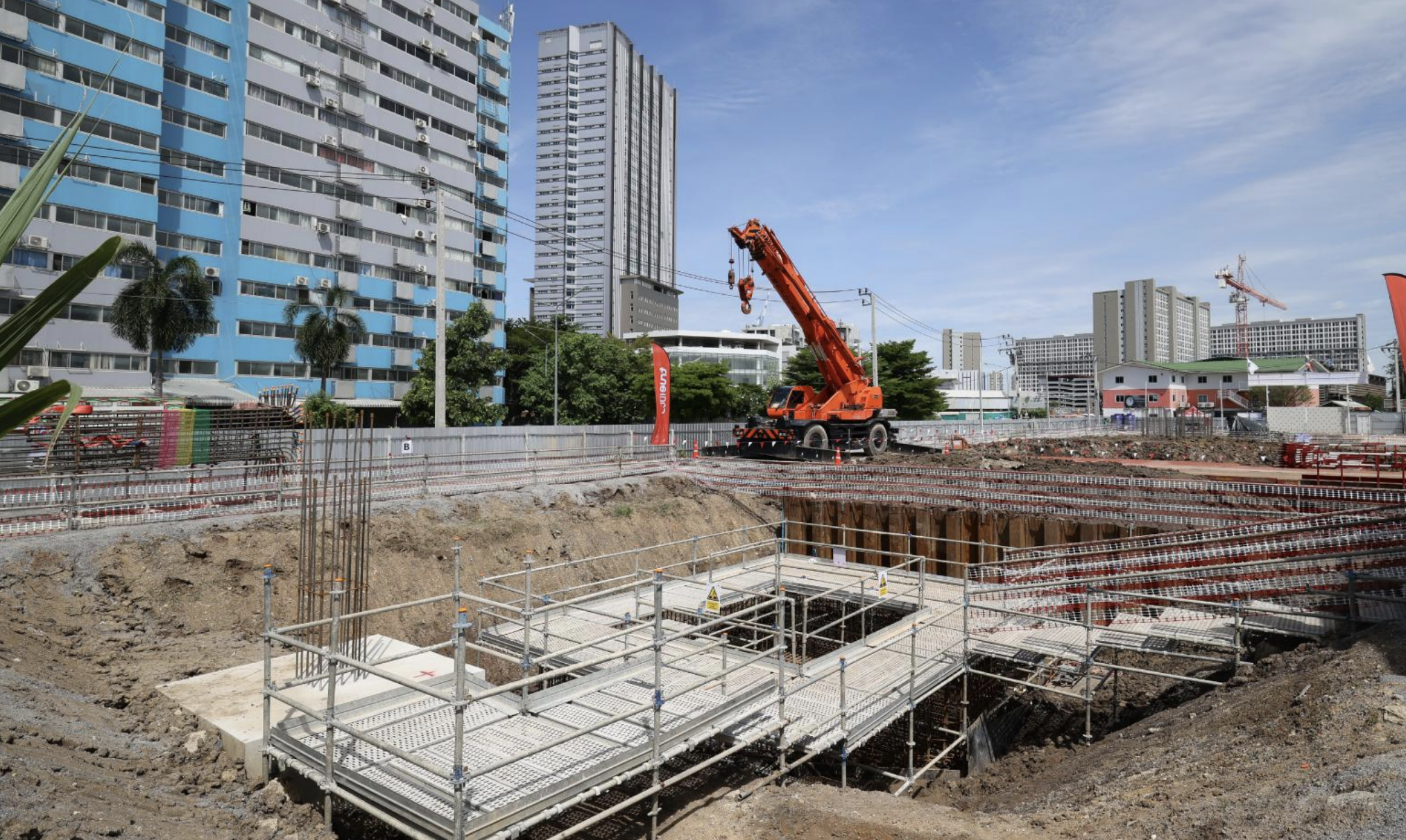
Around 49 projects already under construction have been paused, while decisions on more than 117 projects waiting for approval are also on hold.
At first glance, that sounds like Thailand is getting cold feet about data centres.
It isn't. 🚦
The government's message is much closer to: “We want the investment — but let's make sure we know exactly what we're getting.”
And with Thailand attracting billions of baht in digital infrastructure investment, this could be a very important turning point.
🚀 First, just how big is Thailand's data centre boom?
Thailand has been attracting enormous investment into data centres, cloud computing and AI infrastructure.
During the first half of 2025, companies submitted investment-promotion applications covering 28 data centre projects worth 521.2 billion baht.
By the end of 2025, the Board of Investment said it had received applications for 36 data centre projects worth more than 728 billion baht.
And the investment hasn't exactly slowed down.
During the first half of 2026, Thailand recorded 1.47 trillion baht in total investment applications across 1,299 projects, with digital infrastructure and AI among the major drivers.
So this isn't a small industry suddenly getting some extra paperwork.
Thailand is in the middle of a serious data centre investment rush. 💰
🤔 So why is the government worried?
Here's where things get interesting.
A data centre might look like a giant warehouse filled with computers.
But those computers need some very serious infrastructure behind them.
And then there's AI.
Modern AI systems require enormous amounts of computing power. More computing means more servers, and more servers mean more electricity and cooling.
So Thailand has a bit of a balancing act on its hands.
The country wants to become a regional AI and digital hub — but the infrastructure required to make that happen can put serious pressure on electricity, water, land and local communities.
🧩 The problem: everyone was looking at a different piece of the puzzle
Until now, investors could find themselves dealing with different government agencies for different parts of the same project.
One agency might handle electricity.
Another might look after water.
Another handles telecommunications.
Another deals with buildings.
Another considers environmental issues.
And another may be responsible for investment promotion.
The result?
A lot of separate pieces, but not necessarily one complete picture.
That's why officials are now trying to bring all of this information together.
The thinking is simple: instead of asking “Can this project get permission?”, Thailand wants to ask “Does this project make sense for Thailand as a whole?”
📊 The numbers tell the story
According to information gathered from 16 government agencies, Thailand currently has:
🟢 35 data centre projects or companies already operating.
🟠 49 projects under construction.
🔴 117+ projects waiting for permission or consideration.
That means at least 201 projects are either operating, being built or sitting somewhere in the approval pipeline.
And the last two categories alone account for at least 166 projects.
That's a lot of servers waiting in line. 🖥️
It's also why the government has decided to take a breath.
🛑 The pause isn't supposed to kill investment
This is probably the most important thing to understand.
Thailand isn't saying:
“Foreign companies aren't welcome.”
Quite the opposite.
The government clearly wants investment in digital infrastructure.
The Board of Investment has continued supporting major data centre projects during 2026. Earlier this year, seven data centre and data hosting projects worth more than 96.8 billion baht were approved.
So the message isn't:
“Stop building.”
It's:
“Build smarter.” 🧠
🌏 Thailand has already attracted some seriously big players
This isn't an industry being driven by small companies alone.
Major international technology companies have been expanding their presence in Thailand.
The Board of Investment has previously approved major projects connected to companies including Google and GDS, while investment and expansion plans have also involved companies such as Amazon Web Services and TikTok.
And some of the projects being discussed are enormous.
A data centre project approved for Chachoengsao was designed to support an IT load of 200 megawatts.
Another project in Chonburi was approved with an IT load of 134 MW.
For perspective, the government's previous investment-promotion framework used 2 MW as the minimum IT-load requirement for certain high-efficiency data centre projects.
So when officials say that 2 MW may actually be too small to determine whether something should be treated as an industrial operation, you can see why.
⚡ Electricity is becoming a very big deal
Imagine dozens of enormous buildings switching on thousands of servers around the clock.
They can't exactly plug into the nearest wall socket. 🔌
Large data centres need serious power infrastructure, including substations, transmission capacity and backup systems.
Thailand's government is therefore looking at whether the country's electricity system can comfortably handle the expected growth.
Officials are also considering a dedicated electricity category for data centres, with pricing designed to better reflect the actual and indirect costs of supplying these extremely large users.
And there's another important piece:
🌱 Clean energy.
Thailand wants data centres to use more renewable energy and is looking at mechanisms such as direct power purchase agreements to make that easier.
💧 Then there's water
This is the part people sometimes forget.
Computers produce heat.
Lots of computers produce lots of heat. 🔥
Data centres therefore need sophisticated cooling systems, and some cooling technologies can require substantial amounts of water.
That creates a potential conflict.
A data centre may be hugely valuable to the economy, but the same facility could put additional pressure on local water supplies — particularly during dry periods.
Thailand's new approach will therefore look at things such as:
Thailand's investment authorities have already been moving in this direction, including consideration of water-management requirements for promoted data centre projects.
💰 Thailand wants to know: “What's in it for us?”
This may be the most interesting part of the new policy.
For future projects, Thailand is considering a more competitive process where investors could effectively pitch their projects to the government.
Instead of simply asking for permission to build, companies could be asked to explain what their project will actually contribute to Thailand.
That could mean:
The Board of Investment has already introduced requirements encouraging data centre investors to provide tangible benefits such as training Thai workers, working with educational institutions, supporting SMEs and developing the domestic supply chain.
So Thailand is increasingly asking a much bigger question:
“How much value does this giant building create for the country beyond the money spent constructing it?”
👷 The government wants more than construction jobs
Building a data centre can create major construction and engineering activity.
But Thailand wants the benefits to continue long after the construction crews have left.
The government wants foreign investment to help develop Thai talent, create highly skilled jobs, strengthen domestic suppliers and build a wider digital ecosystem.
It also wants Thai companies and small and medium-sized enterprises to actually benefit from the AI infrastructure being built inside the country.
That's important because a data centre can be extremely valuable without necessarily employing huge numbers of people once it is operating.
Thailand therefore wants to capture the economic ecosystem around the data centre — not just the concrete building itself.
🌏 Thailand is also playing a regional game
Thailand isn't operating in isolation.
Across Southeast Asia, countries are competing to attract cloud, AI and data centre investment.
Thailand's government has described the country as having the potential to become a major digital innovation hub in ASEAN.
That creates an interesting balancing act.
💰 Attract investment
⚡ Keep the power system ready
💧 Protect water resources
🌱 Limit environmental damage
🇹🇭 Create local value
Move too slowly and investors could choose another country.
Move too quickly and Thailand could end up with infrastructure pressures that are much harder to fix later.
🏢 Data centres are getting their own business category
Here's another issue that sounds boring but is actually pretty important.
Data centre operators have sometimes registered under other business categories, such as warehousing.
That can make it difficult for the government to answer a surprisingly simple question:
“How many data centres does Thailand actually have?”
The answer should be easy.
But if companies are appearing under different categories across different government databases, getting an accurate picture becomes much harder.
That's why Thailand plans to create a specific business category for data centres.
Basically, if you're running a data centre, Thailand wants the paperwork to actually say “data centre.” 🖥️
🔄 Not all data centres are the same
The government also wants its rules to cover both major types of facilities.
Commercial data centres: These provide infrastructure to outside customers. A company might rent server space, computing capacity or other services from the facility.
Private data centres: These are operated by an organisation for its own use. A large company, financial institution or other organisation might operate its own facility instead of selling the infrastructure as a service.
Thailand wants both models properly identified and included in the overall picture.
🎯 The big question: What does Thailand actually get?
This may be the biggest change in thinking.
Thailand isn't satisfied with simply counting how many billions of baht investors promise to spend.
For future projects, the government is considering a competitive proposal process where investors would effectively have to pitch the value of their project to Thailand.
Imagine two companies want to build enormous data centres.
Company A: “We'll spend billions building a facility.”
Company B: “We'll spend billions, train Thai engineers, use cleaner energy, develop local suppliers and help Thai businesses access AI.”
Under the proposed approach, Company B could have a much stronger case.
That's the shift:
From attracting investment at any cost to competing for investment that delivers the most value. 🇹🇭
👥 Four teams are being put on the job
The government has created four main areas of work to turn the broad policy into actual requirements.
01 — 💰 Economic
This team will look at the economic value of each project and what it contributes to Thailand's wider economy.
02 — ⚡ Infrastructure
This group will look at electricity, water, digital networks and clean-energy requirements.
03 — 🏗️ Sites and buildings
This group will look at where data centres should be located and whether buildings and electrical infrastructure are safe.
04 — 🌱 Environment
This team will develop sustainable operating guidelines and focus on environmental responsibility rather than simply punishing operators.
🔎 The rules won't stop when the doors open
Another important change is the plan for post-opening audits.
In other words, getting permission to build a data centre won't necessarily be the end of the government's involvement.
Thailand wants mechanisms for checking facilities after they begin operating.
That could help answer a simple but important question:
“Is the data centre actually operating the way it promised?”
📝 The government also wants to make approvals easier
Here's the funny contradiction.
The government wants more control over data centres.
But it also wants the approval process to become easier for investors.
Those two things aren't necessarily incompatible.
The current system can involve investors going to multiple agencies separately.
Thailand wants to create a one-stop approval mechanism so investors can navigate one coordinated process rather than a maze of separate applications.
So the goal is basically:
Stricter rules ➕ simpler process.
That could actually be good news for serious investors.
⏰ Why now?
Because the industry has grown incredibly quickly.
Data centres and digital services have become some of the biggest drivers of Thailand's investment pipeline.
The country is also trying to position itself as an important location for cloud computing, AI and the wider digital economy.
But the government's regulatory system wasn't necessarily designed for a sudden flood of projects consuming enormous amounts of electricity, water and land.
So rather than wait until the problems become obvious, officials are trying to put the framework in place now.
🤖 The bigger AI story
There's also a much bigger race happening behind all of this.
Thailand isn't looking at data centres simply as buildings full of servers.
They're increasingly being treated as critical infrastructure for AI and the digital economy.
AI models need computing power.
Cloud services need computing power.
Digital businesses need computing power.
And countries across Southeast Asia are competing to attract the companies building that infrastructure.
Thailand wants a piece of that race.
But there's a catch.
If Thailand spends enormous amounts of public resources supporting data centres while ordinary businesses and households struggle with infrastructure constraints, the political and economic benefits become much less obvious.
That's why the government's new approach is putting so much emphasis on who pays, who benefits and who carries the environmental cost.
📉 So is this bad news for investors?
Not necessarily.
In the short term, yes, there is clearly uncertainty.
Projects that were moving forward may have to wait while the government works out the new rules.
But from an investor's perspective, having a clear national framework could eventually be better than dealing with a fragmented approval system.
Investors generally don't like unclear rules.
They can, however, work with clear rules — even strict ones — if they know what those rules are before committing billions.
Thailand is therefore trying to replace a fragmented approval system with something more predictable and coordinated.
📅 What happens next?
The agencies involved have been given one month to develop the new criteria.
The government wants the new framework to answer some pretty fundamental questions.
And perhaps the biggest question of all:
How can Thailand become an AI and digital powerhouse without creating a brand-new infrastructure headache? 🤔
🇹🇭 The bottom line
Thailand isn't turning its back on data centres.
Quite the opposite.
The country wants to attract them because they can bring enormous amounts of investment and help Thailand become a bigger player in cloud computing, AI and the digital economy.
But the government now appears to be saying:
“Before we build hundreds more, let's figure out where they should go, how much power and water they need, what they do to the environment — and what Thailand gets in return.”
That could make the next stage of Thailand's data centre boom very different from the first.
The race isn't necessarily over.
🏁 Thailand is just changing the rules of the race.