 Thaizo
🗓️ October 12, 2026
📍 Bangkok, Thailand
Asia's Next Chapter: Can the Growth Story Continue?
Ageing populations, artificial intelligence and geopolitical tensions are changing Asia's economic future. The decisions made today could determine how prosperous the region becomes tomorrow.
Asia has become one of the world's major engines of economic growth. Investment, manufacturing, education and international trade helped transform the region over several decades. But the next stage will bring a different set of challenges.
1. Asia's extraordinary economic rise
Asia's growth was not simply luck. Governments invested in infrastructure, developed industries, trained workers and connected their economies to international markets.
The figures show how much Asia's contribution to global growth has increased. The lesson is that investment and openness can create opportunities when supported by effective policies and institutions.
2. The ageing population challenge
People are living longer while birth rates are falling in many Asian economies. As a result, a smaller workforce may need to support more retirees, increasing pressure on healthcare, pensions and businesses.
The IMF also estimates that matching women's employment rates to men's could add 112 million workers across Asia.
Estimated potential increase if women's employment rates matched men's, according to the IMF.
Countries can respond by improving childcare, expanding training, encouraging workforce participation and helping people remain employed for longer where appropriate.
3. Can AI become Asia's new workforce?
Artificial intelligence could help businesses produce more with the workers they have. It could support healthcare, manufacturing, education and administrative work. This is particularly valuable when the number of available workers is shrinking.
These ranges are scenarios, not guaranteed forecasts. The actual benefits will depend on skills, investment and how successfully businesses adopt AI.
The big catch:
AI could widen the gap between large companies that can afford advanced technology and smaller businesses that struggle to keep up. Workers may also need retraining as job requirements change.
The goal is not simply to buy new technology. Countries must ensure that workers and businesses can use it effectively.
4. Why regional trade matters
Geopolitical tensions and trade restrictions can disrupt supply chains and make international business more uncertain. One possible response is to strengthen trade between Asian economies.
These figures refer to trade in final goods, not all trade. The IMF argues that stronger regional integration could help businesses access more suppliers and customers.
Simpler customs procedures, better transport connections and clearer trade rules could help businesses trade more easily across borders. Regional integration would complement, rather than replace, trade with the rest of the world.
5. Three lessons from Asia
South Korea
Focus: Institutions
Strong industrial development and effective institutions helped support the country's economic transformation.
Thailand
Focus: Industry and people
Export industries, infrastructure, healthcare and education helped shape Thailand's development.
India
Focus: Reform and digitalisation
Economic liberalisation, education, digital infrastructure and public investment have contributed to India's growth.
The shared lesson
Focus: Adaptation
There is no single development formula. Countries need policies suited to their own people, institutions and economic strengths.
6. What does this mean for Thailand?
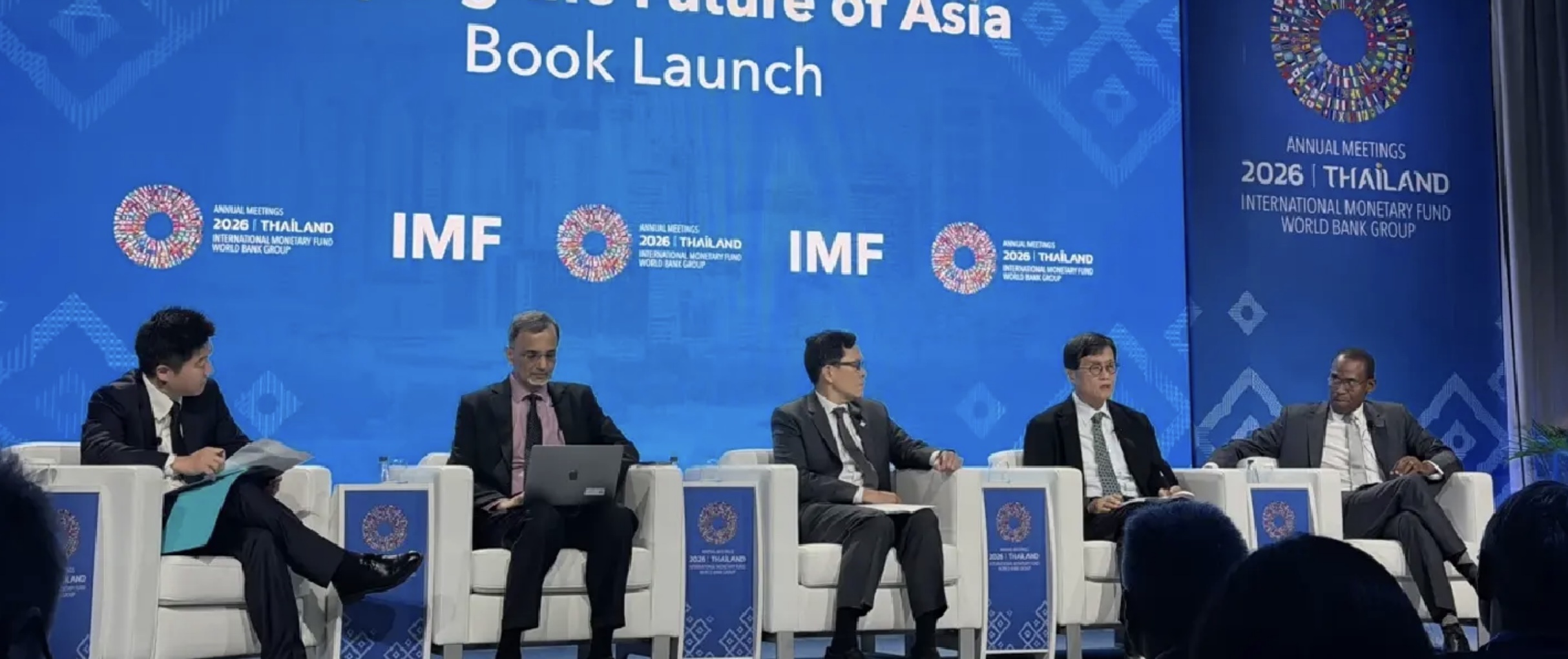
Thailand faces the same demographic and technological pressures discussed at the IMF meeting. Five priorities stand out.
Five policy priorities discussed in the article. The bars are decorative and do not represent measured scores or rankings.
Thailand will need to help workers learn new skills, support smaller businesses in adopting technology, prepare public services for an older population and strengthen trade links across ASEAN.
Growth also needs to improve people's lives. Higher productivity matters most when it creates better jobs, stronger businesses and more resilient households.
7. Asia's next growth formula
The old growth model
More workers
More factories
More exports
Buying new technology
The emerging growth model
More productive workers
Higher-value industries
Stronger regional trade
Making technology work for people
Asia's future will depend on how well countries adapt to ageing populations, use AI and manage geopolitical tensions. These challenges are serious, but effective policies can create new opportunities.
The bottom line
Asia's next chapter will not be written by technology or trade alone. It will be shaped by the decisions governments make about investment, skills, institutions and opportunity.
For Thailand and Southeast Asia, the goal is to build economies that can prosper with fewer workers, benefit from new technology and remain resilient in an uncertain world.
Asia has already proved it can transform itself. The next test is whether it can transform itself again — before the world forces it to.
Source: Adapted from the supplied article on the IMF publication Shaping the Future of Asia: Opportunities and Challenges, October 12, 2026. Estimates are scenarios, not guaranteed outcomes.